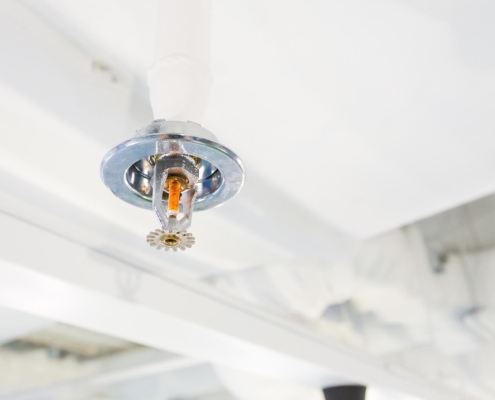
Why Complex Buildings Require Custom Fire Protection Solutions
“Complex” covers more than height or square footage. It includes buildings with varied occupancies under one roof, specialized hazards, tight shafts and interstitial spaces, mission-critical uptime needs, stringent insurance criteria, or aggressive schedules with many trades on top of each other. These projects challenge conventional approaches because:
- Fire loads vary from space to space, so a single density does not fit the whole building.
- Water supply and pressure change across elevations, especially in tall structures.
- Equipment rooms, clean rooms, freezer warehouses, and process areas each require tailored protection.
- Local amendments can be stricter than baseline NFPA standards, and multiple stakeholders must sign off.
Custom fire sprinkler system design aligns hazards, codes, insurance expectations, and constructability so what is engineered can actually be built and serviced over the life of the facility.
Fire Sprinkler System Design That Engineers for Risk and Complexity
Complex projects succeed when risk, code, and constructability meet on page one. Before a single pipe is modeled, we define hazards, confirm design criteria, and plan how the system will be installed and serviced after turnover. That front-loaded diligence is what turns design intent into a system you can count on.
Building-Specific Risk Assessments
Every design starts with the occupancy and hazard classification. We map each space to the correct design criteria, identify special hazards, and confirm separation or spill control needs where required. Aligning the risk profile with NFPA 13 and local amendments protects life safety and streamlines approvals. This is where fire sprinkler system design earns its keep, because misclassifying even one zone can trigger redesigns, delays, and costly rework.
Hydraulic Calculations and Zoning Strategies
Tall or sprawling buildings make hydraulics decisive. We model flow and pressure at the most remote and demanding points, then create zones that deliver performance without oversizing. Zoning also supports serviceability and fire department operations by limiting isolations to manageable areas. For high-rise work, we coordinate risers, floor control valves, and pressure-reducing valves so pressures stay within listed ranges at every elevation. Accurate hydraulic data is the backbone of buildable fire sprinkler system design.
Material and System Type Selection
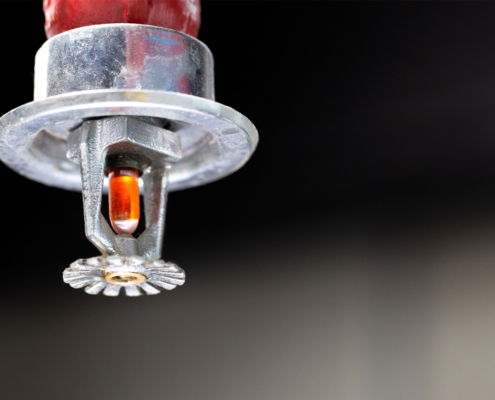
System type is chosen for the environment, not convenience. Wet systems protect conditioned interiors. Dry and pre-action systems protect spaces exposed to freezing or areas where accidental discharge would be unacceptable. Deluge systems serve fast-developing hazards. We also select pipe materials and sprinklers for the conditions: CPVC for certain light-hazard applications, galvanized or stainless in corrosion-prone zones, corrosion-resistant coatings, high-temperature heads near process heat, and ESFR options for high-rack storage where allowed. Matching the product to the environment is central to professional fire sprinkler system design.
Integration with Building Systems and Stakeholders
A sprinkler system rarely stands alone—its value multiplies when it is coordinated with alarms, monitoring, smoke control, and building automation. We plan the interfaces early, model conflicts before mobilization, and align the testing sequence with the AHJ so approvals move without surprises.
Coordinated Technology That Talks to Each Other
Protection never operates in isolation. We integrate the sprinkler system with the fire alarm panel, monitoring service, smoke control strategies, and, where required, building automation for supervisory signals. This ensures waterflow, valve tamper, and pump signals reach the right destinations, and that smoke control sequences do not conflict with suppression.
BIM and Clash-Free Routing
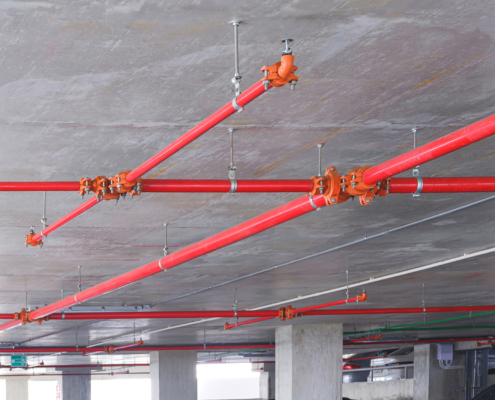
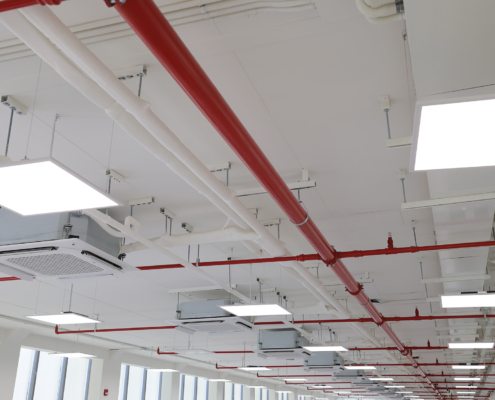
On complex jobs, 3D coordination is non-negotiable. Our team models mains, branch lines, heads, seismic bracing, and hangers in BIM so conflicts with structure, ductwork, cable trays, and architectural features are resolved on screen instead of on site. Early coordination reduces field changes, accelerates installation, and protects finished ceilings.
Early Collaboration with the Project Team
Architects, MEP engineers, the GC, and the AHJ all shape the outcome. We participate early, ask the risk questions up front, propose alternates when they improve schedule or maintainability, and confirm acceptance testing sequences with the inspector. That front-loaded effort eliminates guesswork later.
Commercial Sprinkler Installation for Complex Projects
Complex projects are built on discipline. The best design still fails if the install cannot hit the timeline or if trades fight for space. Our approach to commercial sprinkler installation focuses on:
- Prefabrication where it makes sense to shorten onsite labor and improve quality.
- Just-in-time delivery so materials do not clog corridors or block other trades.
- Phased area turnovers aligned with the GC’s pull plan, so ceilings close on schedule.
- Clear field leadership that communicates daily with superintendents and other trades.
Tight sites and occupied retrofits add constraints. We stage noisy or disruptive work off-hours, work around tenant operations, and keep riser rooms and egress routes clear and code-compliant throughout.
Fire Protection System Installation in Complex Environments
When you hear “installation,” you should also think of inspection, testing, and documentation. That is the standard we hold from day one on site.
Quality Assurance Throughout the Build
We verify hanger spacing, seismic bracing, head types and orientations, clearances, valve accessibility, and labeling as we go, not after the fact. Field conditions are documented and tracked so any deviations are approved and recorded. This level of QA turns final inspection into a confirmation rather than a discovery session and is a hallmark of rigorous fire protection system installation.
Commissioning, Testing, and Close-Out
Hydrostatic tests, main drain tests, pump acceptance tests, and alarm interface checks follow the sequence established with the AHJ. We generate clear reports, update as-builts to match installed conditions, and hand over O&M materials and training. The end result is a system that operates to specification and a documentation set your facilities team can actually use.
Why a Full-Service Fire Sprinkler Contractor Changes Outcomes
Complex work benefits from a single accountable partner who owns the plan and the result. As a full-service fire sprinkler contractor, Harring Fire handles:
- Design and engineering guided by codes, insurance requirements, and real-world serviceability
- Permitting and AHJ liaison to keep submittals moving and approvals predictable
- Fabrication and installation under experienced field supervision
- Inspection, testing, and documentation with no loose ends
- Lifecycle support for ongoing inspections, upgrades, and expansions
You get one team, one schedule, and one source of truth from concept through turnover.