Why Seasonal Maintenance Matters for Fire Sprinkler Systems
Sprinkler systems work around the clock in changing conditions. Cold snaps can freeze stagnant water. Heat can stress panels and pipe supports. Humidity can attack metals and electronics. Ignoring these stressors shortens component life and increases the risk of nuisance alarms or outright failures. The goal is simple: anticipate the weather, adjust maintenance accordingly, and keep your system ready when it counts. This is the mindset behind effective fire sprinkler system maintenance.
Winter Hazards: Freezing, Fatigue, and Condensation
Winter creates the widest performance swing for most buildings. Unheated spaces, roof lines, loading docks, stair towers, attic voids, and remote storage rooms deserve extra attention.
Frozen Sprinkler Pipes: Prevention in Unheated Spaces
Water expands as it freezes. Even a small ice plug can crack a fitting or split a pipe. Review every run in attics, exterior soffits, and parking structures. Verify insulation is intact, heat trace is powered, and space heaters protecting valve enclosures are alive and well. If you operate a dry system, confirm that low points drain fully and auxiliary drains are used correctly.
Quick tips
- Verify enclosure heaters and heat trace power with a simple function test
- Insulate exposed sections and repair gaps
- Train staff to open auxiliary drains in freezing conditions
Ice Plugs From Condensation in Dry Pipe Systems
Dry systems can accumulate a small amount of moisture through temperature cycling. That condensate can freeze into ice at low points and act like a blockage. Your technician should drain trapped water during cold-weather visits and confirm drum drips are clear and labeled.
Equipment Stress From Heater Failures
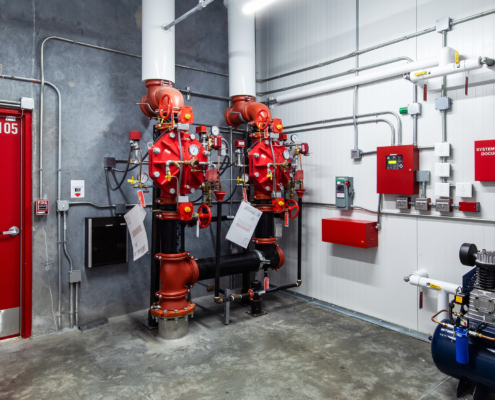
Valve enclosures and riser rooms often rely on electric or gas heaters. A tripped breaker, failed thermostat, or blocked vent leaves critical parts unprotected. Add visible temperature indicators and build a simple check into daily rounds. Catching a 40-degree room before the arctic blast arrives can prevent thousands in repair costs.
Expansion and Contraction Fatigue on Outdoor Pipes
Repeated freeze and thaw cycles move metal. Hangers loosen, supports shift, and joints experience added stress. A visual check for sagging lines, loose clamps, or fresh rub marks helps you tighten the system before movement becomes a leak.
Spring Risks: Water Ingress and Organic Intrusions
Spring is cleanup season. Melting snow and heavy rain test building envelopes, and new growth can hide critical equipment.
Flooded Mechanical Rooms
Basement riser rooms and valve pits can take on water after big storms. Standing water corrodes valves and destroys electronics. Confirm pumps, sensors, and controllers sit above known water lines. Test sump pumps, check backflow enclosures, and keep floor drains clear.
Vegetation Obstruction
Greenery grows fast. Keep access paths to hydrants, wall-mounted heads, backflow preventers, and exterior valves clear. It saves time during service and avoids code violations for blocked access.
Humidity-Driven Mold in Enclosures
Warm, damp air can collect inside control cabinets and insulated pipe chases. Persistent moisture damages boards, contacts, and wiring. Dehumidify where needed and allow airflow around control panels. If you see condensation, address the source rather than wiping it away each week.
Summer Strain: Heat, Pressure, and Sun Damage
High temperatures and direct sunlight affect both electrical equipment and piping.
UV Degradation of Exposed Components
Rooftop piping, exterior bell covers, and plastic enclosures suffer under UV exposure. Brittle plastics and faded indicators are not only cosmetic concerns. Replace sun-damaged parts and apply rated UV protection where appropriate.
Overheating of Panels and Compressors
Poor ventilation in riser rooms and pump rooms can push panels and air compressors beyond their comfort zone. Heat can trigger nuisance alarms, shorten electronics’ life, or knock a compressor offline. Improve ventilation, keep louvers clear, and verify that high-temperature alarms function.
Pipe Expansion and Fitting Stress
Metal expands with heat. Long rooftop runs can move more than you expect, which stresses hangers and couplings. Seasonal checks for alignment and support spacing help you correct minor shifts before they cause leaks.