For building owners evaluating their options, the decision typically comes down to three suppression approaches: water-based sprinklers, dry chemical systems, and clean agent gas systems. Knowing how a clean agent fire suppression system compares to each alternative makes it easier to specify the right solution for every zone in your facility.
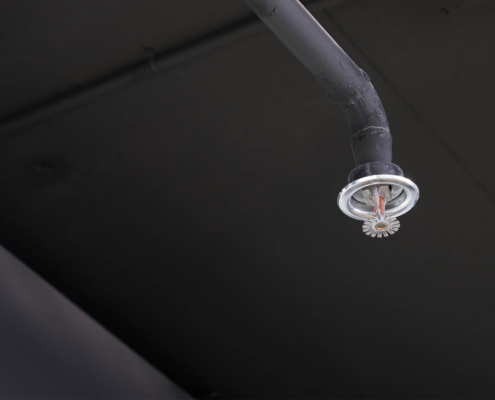
Water-based systems are the standard for most commercial occupancies and the right choice for the majority of a building’s square footage. In sensitive environments, though, water is the problem. The concerns around water damage from fire sprinkler systems are often overstated for general occupancy spaces, but in a server room or control room, even a limited water event can result in losses that far exceed the fire damage itself.
Dry chemical systems offer an alternative but carry their own limitation: chemical residue. Dry chemical agents coat every surface in a protected space, and that residue cannot be cleaned out of sensitive electronics without destroying the equipment in the process. That makes dry chemical systems a poor fit anywhere precision hardware needs to survive a suppression event.
A gaseous fire suppression system removes both problems. The agent discharges, extinguishes the fire, and dissipates completely, leaving no water damage or chemical residue behind. For facilities that already have wet pipe or dry pipe sprinklers protecting most of the building, adding a clean agent zone for the sensitive spaces is a natural complement, not a system-wide replacement.